Furnishing the Soul: The Interior Void of Aimlessness
The old paradox goes that if sin is a byproduct of free will, and you are sinless in heaven, then there can be no free will, and you are a mindless, worshipping automation. Free will is a human’s capacity to do anything within their capabilities, context dependent, of course. In the Western world, there appears to be an abundance of free will. Postmodernity has ushered in the dissolution of traditional shackles, and now we are ‘liberated’. We are no longer expected to marry our first romance, raise a family, and earn money in conventional means; our responsibilities are to ourselves in a new era of hyper-individuality. Many young people travel as much as they can throughout their 20s and 30s, a human fridge magnet of sorts. The endless external pursuit to extrovert oneself disproportionately, as if we are running away from something internal. There is no guidance; the classical structures once considered training wheels for human expectation have been largely removed. We are aimless, shot into an infinite space with no target in sight, a voice that is slowly echoing into something unrecognisable.
Aristotle believed in Telos, that everything that is encompassed within nature has a purpose, a meaning, a target that it has been aimed towards. Eudaimonia, the summit of human telos, to flourish in existence and find contentment, to Aristotle, was key. So, is our new hyper-individualistic lifestyle eudaimonia? Not to Aristotle, for to reach this state, one must have lived a virtuous life that fulfils their physical, mental, and spiritual potential. To be aimless is not a purpose; to self-indulge in hedonistic narcissism without the extrapolation of wisdom, internal development, or something to contribute to the human wheel is nihilism, not eudaimonia.
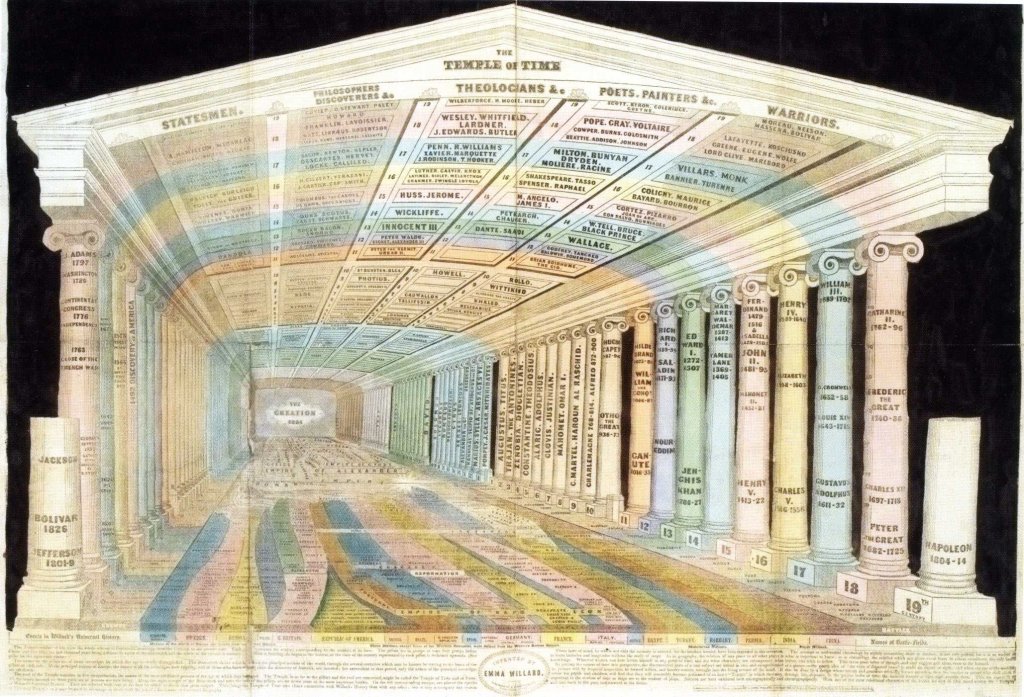
Maybe Aristotle is wrong? In ancient Rome and Greece, a method was developed, ‘The Method of Loci’, a memory palace used as a mnemonic for memory. It is performed as follows: picture a palace, place an object, or painting, or maybe even a piece of furniture in that palace, and embed within that item a piece of information. For this vase of white roses, I store this concept, or memory, or what you learned from this book or video. Continue to furbish your palace, building associations, and you shall find your ability to retain information greatly increases. The method was used in memory competitions in ancient times and is still extremely useful even today.
Now, to why I have brought this up. People no longer have memory palaces; they are so overcome with the freedom of external validation that their internal palace is bare and hollow. It sits without cause. Why furnish it when ChatGPT or Google can give me my information? In the beginning, all you know is what your mind and senses absorb, and in the end, that is what will dissolve through the hourglass of mortality. I strongly believe that despite the utility of technology, what lies within transcends utility, to furnish the spirit is something more. True contentment is not achieved when the scales are unbalanced; virtue is more than a pretty concept; it is the vigour of the soul.
We are fast becoming cyborgs; this is natural, but it is not an excuse to lose touch with our biology, with the essence of our longing for meaning. When the wristwatch came, humans no longer needed sundials; they could check the time at any moment with a single movement of their arm. Technology becomes a part of our autonomy, but we should not let it mean a loss to our interiority. Media sharing creates a necessity to document every interesting moment in our lives, almost as if we did not, then it would never have happened. Free will is in abundance in many ways, and this is a wonderful thing; use it to furnish your mental palace, to bathe your soul, to feed your spirit. You are not meaningless, you are more than an individual, your trajectory is more than the external, the space you reside in is waiting to be filled by you.
 AMKent books
Leave a comment