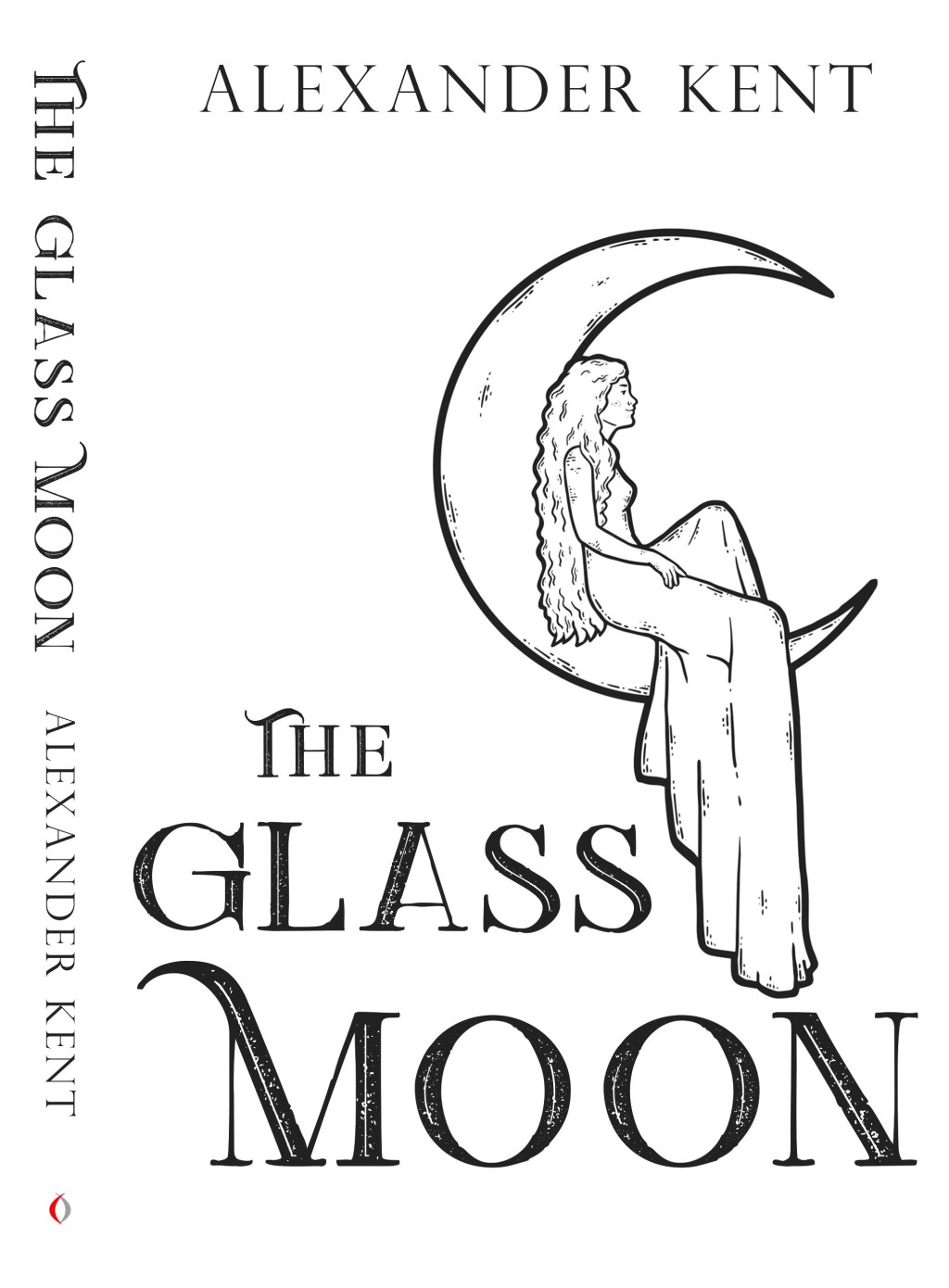
The Glass Moon was a book I had wrote at 19 years old, it was at first a side project to another book I was writing that has, as of now, never seen the light of day. In all honesty, I was in a very dark place during first drafts of the glass moon. Unfortunately, such places I seem to have made my home as I get older. In original drafts there was a third character on the moon, who called himself ‘Mr Vine’. He served as an antagonist to Colette and Edgar on the moon, pushing Edgar into making his choice of inheriting the moon or staying human. I cut Mr Vine in final iterations, as I wanted Colette and Edgar to be the primary focus of the book, and with both Edgar’s mother and Christopher, I felt he bloated the narrative. Additionally, Edgar’s death was originally in an alley way after a failed mugging, but it seemed like a much better opportunity to introduce Edgar as a character if he was hospital bound. This allowed me to change the book from third person to first person, and unravel the narrative through Edgar and his internal monologue. It also made more sense as (spoiler alert) Edgar’s mother, who had sold Edgar to the moon, would not want his death to be as violent and painful as being stabbed to death in an alleyway.
Now on to inspirations, the primary being the Apollo moonquake mission, The fact that the moon slowly recedes away from Earth’s orbit as if it was divorcing itself from humanity, and the Chinese folklore of the thread of fate. The Apollo mission is straight up discussed by Edgar in the very opening of the book, as the lunar module caused the moon to ring like a bell. The recession of the moon from the Earth’s orbit, however, was what inspired me to make Colette divorce herself from humanity. Although she does so through two reasons, she can no longer sustain the heart within the moon, and her guardianship of humanity has added to this strain, watching humanities great capacity for evil. I did not want this book to be too philosophy heavy, as it was important for me to make it both a surface level fantasy tale and, if one wanted to, a symbolic exploration of humanities aspirations to be and dependence towards a guardian. The thread of fate is discussed by Christopher, and a chapter is named after it. There are also many small nods to other inspirations, such as Colette wearing earrings that reference ‘The Little Prince’ by Antoine de Saint-Exupéry. Several character names also reference the moon, and Edgar’s second name, ‘Atlas’, is foreshadowing of his fate to hold the heavens. I, unfortunately, cannot name all in this blog post, as I simply cannot remember all the research and inspirations through the process. However, in future posts I will discuss more.
While there was no specific philosophy I had in mind when writing the book. I did wish to explore the role of a tired guardian, who knew its time was coming up and in as such, must now choose a successor. (Spoiler alert) Colette’s ultimate decision to allow Edgar to grow old and live a complete mortal life, sacrificing any chance of her accompanying him on the moon was something inspired by love and its lack of logical utility. We love those long after they die, further hurting ourselves in the process, we love those that are wrong for us, we love and it seemingly seeps between the crevasses of traditional scientific theories on human’s nature and its propensity for rationality. Due to this, if Colette had inherited anything from her time with humanity, it was the illogical and in this instance, grandly selfless nature of love.


Leave a comment