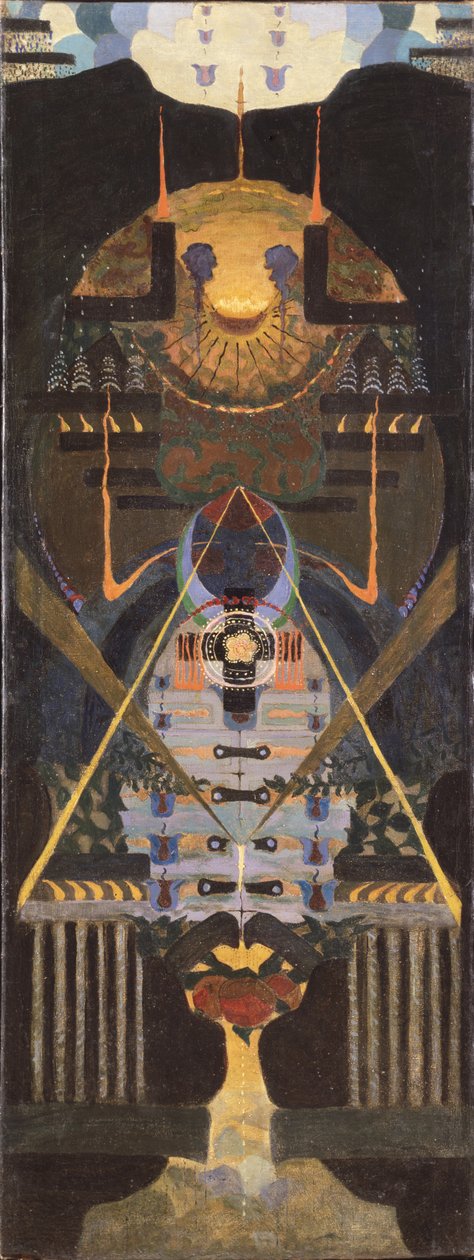
“Music is an unconscious exercise in metaphysics in which the mind does not know it is philosophizing” –Schopenhauer
Music, historically a vessel for devotion, has shifted over centuries to cater primarily to mass consumption, reflecting a broader decline in societal valuation of skill and depth. The origin of music is still unknown amongst anthropologists and musicologists, it is said that it was a mimicry of bird song, other theories posit that it was developed to aid social cohesion. There are religious and spiritual origins also, Mozart wrote music for God such as Requiem in D minor, and Lacrimosa. Bach wrote endless Cantatas in devotion to God and mass, Handel composed ‘Messiah’, and most famously, Schubert’s ‘Ave Maria’. I do not profess to know the origins of music, neither do I believe in a God of Abrahamic religions, but I will confess that the most structurally perfect music has been born out of faith. Even now, there are religious undertones to modern music, often satanic as this causes the most outrage still, but faith is a constant component to the algorithm of musical expression. Music has become postmodern, minimalist, and in terms of structure, fairly bland and unoriginal. These are not especially opinion based assertions, musicians owned by the same record label are constantly suing for copying each others songs. Chopin, however, did not have anyone accidentally compose his 1st Ballade. As time has progressed, humanity seems to mostly favour simplicity over technical prowess. Often times classical music is referred to as boring, it takes too long, there is seldom a hook, it is not repetitive enough. Social class has also been applied to music, bourgeoisie are seen to favour classical and contemporary as a sign of elitism, whilst proletariat classes favour more ‘earthy’ music that is relatable. In fact, this relatable aspect is why classical music is not so prevalent in the masses listening habits. A song about the hardships of a failed relationship, complete with memorable lyrics and a catch repetitive chorus is more relatable to most than a 6 minute thematically changing composition dedicated to a Christian God. On paper, the composition is vastly superior technically and artistically than the catchy heartbreak song, but when it comes to humans, we favour the digestible.
I am drawing a binary here, implying that only one can be enjoyed, this is obviously not true. However, I do find that people make music almost a key fragment of their personality. This draws back to the social class discussion, the finer things of an elitist class that stereotypically grounds their personality through ‘class’ and ‘sophistication’, old money opposed to new. The other side of the coin is that art is subjective, what is considered structurally superior is a social construct, art is defined by the consumer and its hierarch placing is determined by such. I find this argument in many ways unconvincing, postmodern art is often lazy, and more times than not, a money laundering scheme. You may enjoy a blank canvas over The Mona Lisa, but one requires skill and the other does not. I find this is often how I define artistic merit, if it requires skill or not. I could not recreate Mozart’s ode’s to God, to even replicate his Harpsichord compositions is a fairly tough task and requires a skilled pianist. I can, however, play 3 chords on a guitar and sing the lyrics to a modern song, although, my vocals would be the skill that lets me down here. Then, how far does vocal skills extend ? Most modern singers are near indistinguishable from one another, again, an opinion. To perform Schubert’s Ave Maria requires not just an insanely profound command of notes, but also a highly trained singer. Most of the modern vocalists are essentially fixed by computers, and whilst not all, but most, sound significantly worse in person. The point I am trying to make here is that postmodernity has eroded the structure of music, the skill required to make something appropriate for the consummation of God has been replaced with the lazy, minimalist slop tailored to make money and be easily consumed. This isn’t every case, but it serves as a vast quantity of the dumbing down of our society for palatable slop. Soylent Green is people, maybe we all need a God to impress once again, because we are no longer aiming for the creator, and thus our creations have suffered.
 AMKent books
Leave a comment