Exploring the possibility that mathematics is a lie.
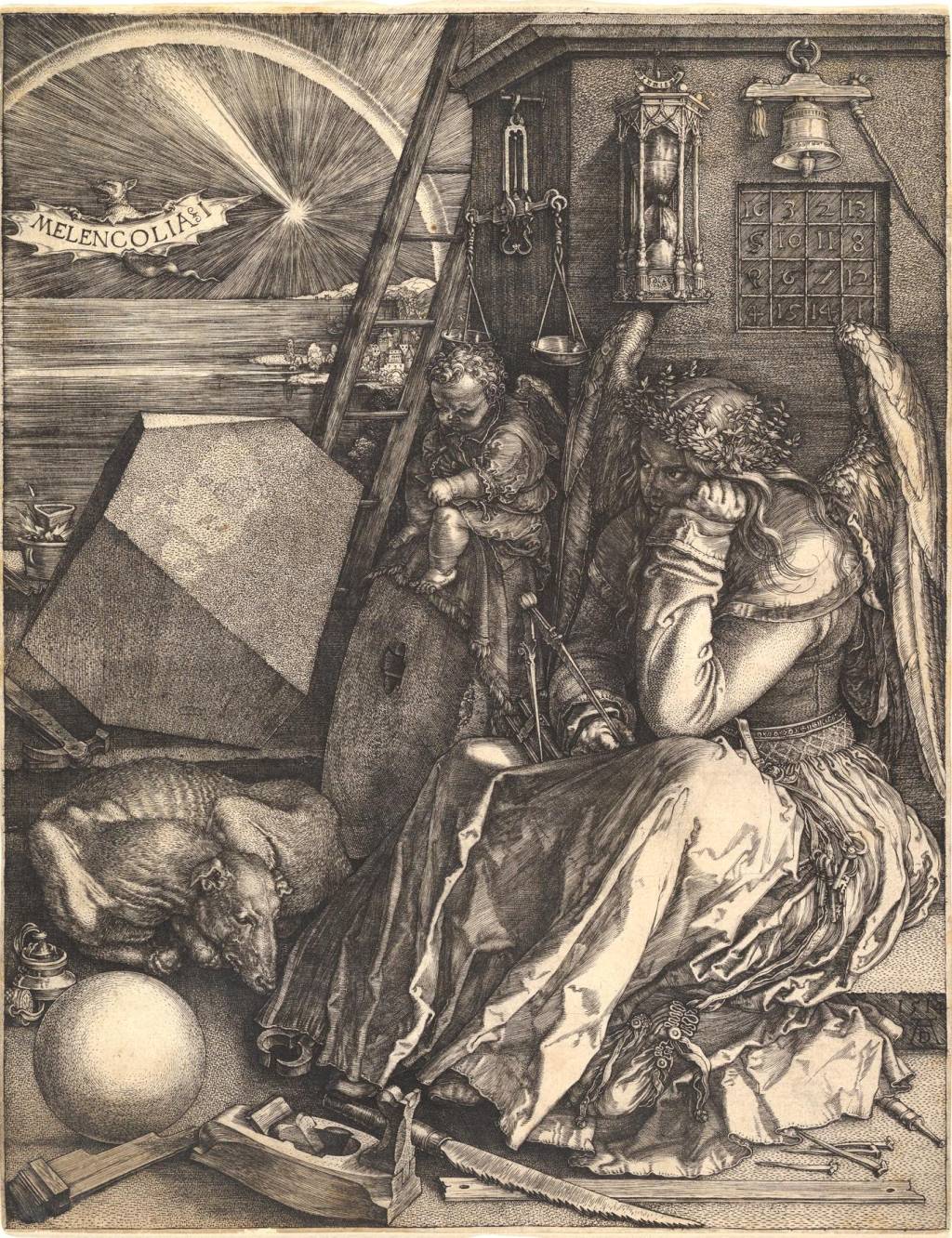
Plato and Pythagoras saw mathematics as a universal truth, something that existed outside of human constructs, a true existence outside of anthropomorphism. Descartes used a hypothetical demon to remove elements of existence that could be the product of deception, concluding that his doubt only reaffirms his own existence. What if maths was a product of Descartes demon? Phrased differently, could maths be a demiurge to ignorance? Maths is universally treated as the one unassailable structure in human thought, but could it be an artifact of our cognition? The Platonic idea that mathematics is an eternal truth, independent of human construction, is known as mathematical realism. However, maths could be a by-product of our brains processing of information, an efficient way of structuring data that is so useful it almost seems independent of human bias. Numbers are mental symbols, our infinities, equations, algorithms and continuity are the ingredients to a human-made explanation. There are no perfect circles, or infinities in the physical world, only approximations. Hypothetically, in an alternative universe, another species may have developed forms of sensory architecture that are entirely different, and even unrecognisable, to our own. Using famous evidence, Kurt Gödel (1931) proved that any sufficiently powerful mathematical system contains truths that cannot be proven within the system itself. Mathematics is forever locked between completion and consistency, its nature is one that imposes self-limitations. If our demon is called Mathematica, then it hides its own vulnerabilities or blind spots, through an allure of logical continuity.
Many would argue that mathematics is too useful, precise and would be expected to fail more often if entirely invented by the human mind, or mislead by a hypothetical demon. I do not argue that maths is uncannily effective in some domains (physics, cosmology), but it is deeply inadequate in others (consciousness, qualitative experience, the emergence of meaning). Mathematics is built upon axioms, essentially unprovable assumptions. Could it all be a symbolic game that’s own flexibility only works when the rules are relative when selected. What if we are embedded within this demons syntax, and the illusion of objectivity is part of a shadow on the caves wall we call cohesions. If this were the case, then mathematics would be the spirit of the human reflecting its own identity onto an abstract void, so that the chaos seemed caring and relational rather than cold and indifferent.
Then reverse them in some kind of reality mirror, so that pattern recognition was acknowledged as a trick, anomalies and chaos were prized, cohesion indicated a wrong turn, the less things made sense the better. A kind of hysteria-ridden God thrashing around a paintbrush on the canvas, a postmodernity Boltzmann brain, something akin to that. I wonder if it would all pan out the same as what we exist in now? According to the ‘infinite monkey theorem’, the chaos would inevitably create something of order. Even if the first principle of the universe would be anti-teleology, structure would still be inbound. This is known as the laws of probability, recurrence will always find a way to rear its logical little head. If a universe did exist as the one my question proposed, then it would be a state of pure becoming without a witness, even existence would harbour too much cohesive merit. Would it still be possible for us to exist in this reality? A hysterical mind hallucinating grandiose dreams of order and linearity in an endless sandbox of non-patterned mess? If we did reside in something so unthinkable, then it would surely require a demon, either self-imposed or external to create an illusion worth soothing our stable seeking mind. If mathematics was the language of the demon, then understanding the words would only deepen the lies.
 AMKent books
Leave a comment