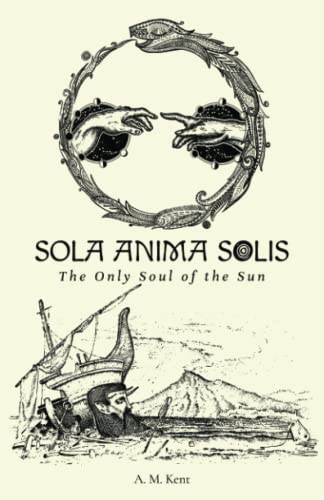
The Sun: One day whilst watching the sun set into the body of the sea I began a mental tangent. At first my idea was hazy, and what felt like a strange nature induced trance, as waves of glistening orange cinder thinned out into shinning pebbles. I was lost in this idea of what the sun has meant to humanity, a thought rather too big for me to digest. The sun has meant everything, it is the reason we are alive, and if we somehow make it past the growing nuclear threats, it could be the reason we die. This is where my short story began, I will write about all three stories in this blog, and although the sun is the last tale in the book, it was the first written. Taking into account an idea of ‘The Great Filter’ (see strange theories blog post), I thought to myself “What if humanity never reached interstellar travel but did not end in war ? What if instead we merely evolved into a different concept ?”. This is where I decided on the idea of ‘the toughskins’, a last iteration of humanity that entirely succumbs to its roots. What separated humans from the rest of the animals on Earth? Our ability to create fiction I thought, as this was something I had read in a book called Sapiens by Yuval Noah Harari.
The Great Filter is a concept that does not only apply to humanity, it is worth noting. However, for the concept of the story, humanity had never made it to a technological peak, and instead digressed paths into a more traditionally natural one. Although everything inside nature is technically natural, including technology, I was inspired by anthropological studies on heightened senses seen in early humans. I was further interested by an idea of telepathy, something that would force us all to say what is exactly on our mind. Due to this, the toughskins only seem to understand fiction. When they are given a cosmic hourglass by a being from a distant corner of the universe, they are soon to make up their own origin story for it. They understand reality, but with the way the human mind works (for example, remembering is more an exercise in thinking about your last thought about an event, then the actual event). I thought it would be interesting to explore this constantly disintegrating grip on what we define as ‘real’, which they over-compensate with fiction.
A final part of the story I wish to address is their ability to see nature in its more apparitional form. This is inspired by childhood ‘hallucinations’ I had, along with my interest in academic works around ‘para-anthropology’. In the book, nature is able to present itself as what we may call ‘ghosts’ or ‘apparitions’, this is because as long as we dwell in nature, it will always be more evolved than us. The toughskins see through this veil, a benefit of their biological evolution, with a quasi-idea that they may be on the cusp of comprehending the fourth dimensional sprinkled in.
Loneliness: Stemming from a short story I wrote as part of a collection at 19 years old (I am now 27), I decided to rewrite it as it fit the theme nicely. The story revolves around an abandoned boy who is aided in escape by a giant serpent. The reason for making the entity that helps the boy a serpent was simple, it is often seen as something not to trust, especially biblically. There are not many themes that run deeper than its surface story, my main inspiration for the tale was a scene from ‘The Little Prince’. Both the boy and the serpent hope for something outside of the castle they are locked within, and unfortunately a choice must be made at the end who leaves. This was in reference to the inescapable grip of loneliness, that even though escape was within reach (a great resolution), it is bitter sweet when alone.
The Soul: The main scene from this story, the glass desert that reflects the orphans of our soul, was originally a part of a journal I wrote during depressive episodes. Although the journal entry was much darker, I thought it a fitting concept to explore the meaning of ones vices. The sea captain is old, and his life is nearing its end, he has seen all that a lifetimes worth can show, and in as such feels he must plunge into the mysterious light in the ocean. The glass desert is to contrast his life on water, as it is his land equivalent. Once he embraces the regret that reflects beneath his feet, he returns to the boat a young man once again. This was not to say that he is without those regrets now, or that he has erased the blemishes that lie on the surface of his soul. It is more of a punishment, he owns responsibility of his failings only because he is old and feels he has nothing left to give. So he is given the usefulness of a younger man once again, and in as such another lifetime.
I think at the end of this blog post it is important to say to those who have interest in reading this book or any that my blog posts centre around. That these are only my motivations and own personal interpretations, scenes are left with enough room that there is no 100% right way to think of the story. It is however deep or little you wish to dig into it that will define it as a story. I hope this blog post made for an interesting read, and feel free to check out my other blogs !
 AMKent books
Leave a comment